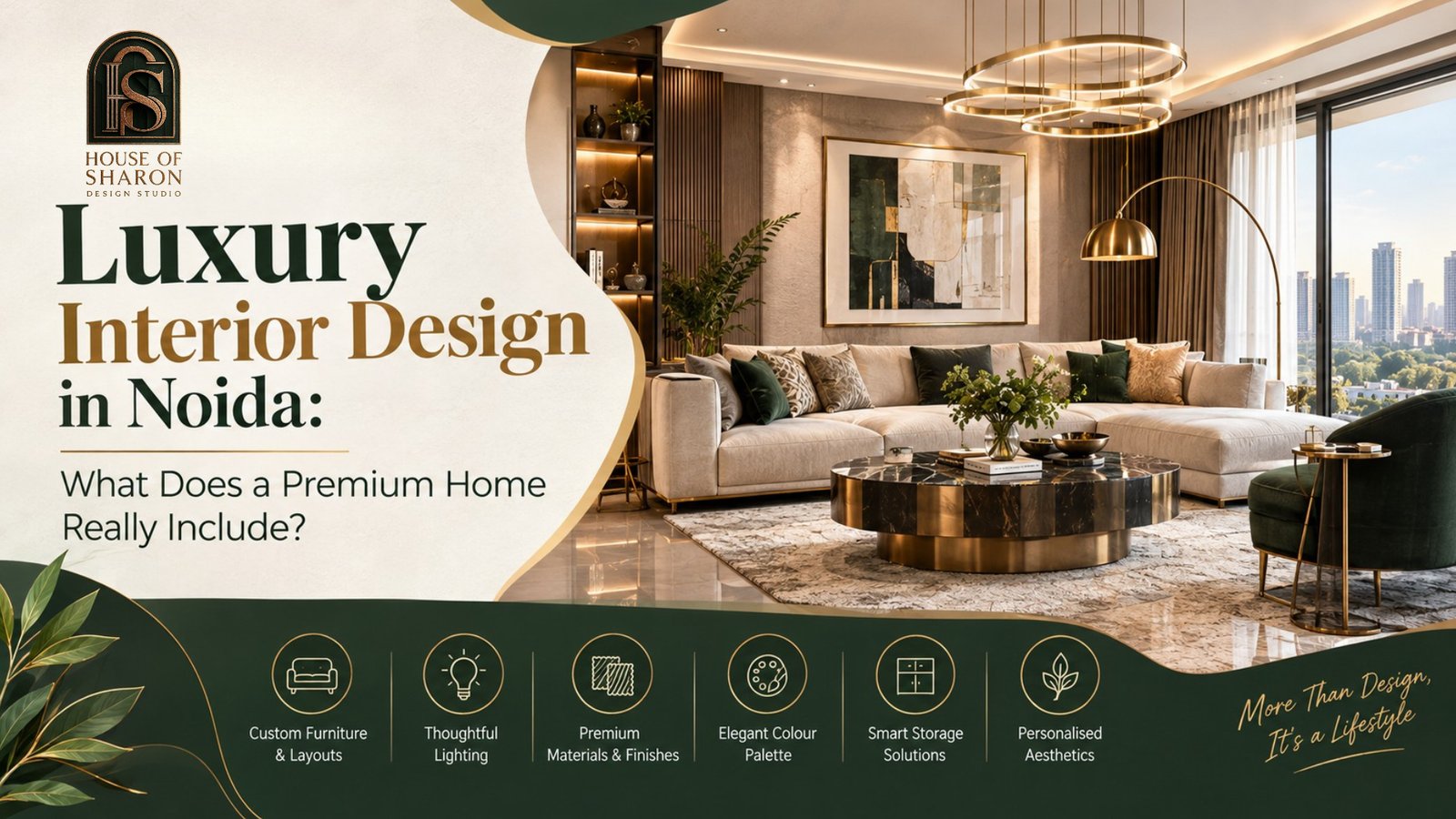
Luxury home interiors are often associated with marble, statement lighting, custom furniture and expensive finishes. While these elements can contribute to a premium interior, they do not automatically make a home luxurious.
A home may use costly materials and still feel uncomfortable if the layout is impractical, the lighting is harsh or the storage does not suit the people living there.
Luxury interior design in Noida is best understood as a combination of thoughtful planning, carefully selected materials, refined detailing, comfort and coordinated execution. The objective is to create a sophisticated home that supports the homeowner's lifestyle, preferences and everyday routines.
Whether you are planning a premium apartment, builder floor or villa, it is important to understand what your investment should deliver beyond appearances.
1. Personalised Space Planning That Suits Your Lifestyle
A premium home should be designed around the people who use it, rather than simply following a popular design style.
A family that entertains frequently may prioritise a welcoming living and dining area. Someone who works from home may need a dedicated study with suitable lighting and storage. Families with children or elderly members may require adaptable furniture arrangements and comfortable circulation.
Good space planning considers furniture placement, walking clearances, door openings, storage, natural light and the relationship between rooms.
Before finalising a layout, discuss how your household uses each space. This helps the designer create a home that feels personal and functional rather than like a showroom.
2. Carefully Selected Materials Instead of Expensive Finishes Everywhere
Premium interiors are not defined by choosing the most expensive material for every surface. They require materials that suit their purpose, work well together and meet the expected standards of finish and durability.
Natural stone, veneers, high-quality laminates, textured wall finishes, glass and metal details can all contribute to a refined interior when selected appropriately.
What matters is understanding where each material will be used, how it will be maintained and how it will perform under everyday conditions.
For example, a prominent stone feature may be worth prioritising in the living area, while a suitable, lower-maintenance finish may be more practical elsewhere.
Request material specifications rather than relying on descriptions such as "premium finish" or "luxury material". Confirm the brand or grade where applicable, the finish, installation requirements and maintenance considerations before approving the final selection.
3. Custom Furniture and Refined Joinery
Custom furniture can help a home feel more tailored because its proportions, storage and finishes can be developed around the actual space.
Well-planned wardrobes, integrated storage, TV units, display cabinets and kitchen cabinetry can reduce awkward gaps and make better use of the available area.
However, customisation should have a purpose. Adding decorative panelling, fluted surfaces or intricate detailing to every wall can increase cost without necessarily improving the overall design.
Premium joinery depends on careful measurements, suitable materials, consistent alignment, neat edge finishing, well-adjusted shutters and drawers that operate properly.
Ask your designer how custom units will be detailed and what information will be included in the working drawings. Review important finishes and hardware before fabrication begins.
4. Layered Lighting That Improves Function and Atmosphere
Lighting plays a major role in how a premium interior looks and feels. A room that relies on a single ceiling light may appear flat, while poorly positioned decorative lighting can create glare or uneven illumination.
A considered lighting plan combines different types of light according to the room's purpose:
Ambient lighting provides overall illumination.
Task lighting supports activities such as reading, cooking and working.
Accent lighting highlights artwork, textures, architectural details or display areas.
The design should also consider natural light, colour temperature, brightness, glare and access for maintenance.
In a kitchen, under-cabinet lighting can illuminate work surfaces. In a bedroom, bedside lighting can be more comfortable for reading than a single bright ceiling fixture. In a living room, selected accent lights can highlight artwork or a feature wall without overwhelming the space.
Plan lighting before finalising the ceiling, electrical points and built-in furniture. This makes it easier to coordinate wiring, fixtures and controls.
5. Storage That Keeps the Home Organised
A premium interior should not only look organised in photographs. It should remain practical when the family uses the home every day.
Storage planning should consider clothing, shoes, luggage, household supplies, crockery, books, cleaning equipment and other belongings. Frequently used items should remain easy to reach.
Wardrobe interiors may benefit from separate hanging sections, adjustable shelves, drawers and dedicated storage for accessories. Kitchen storage should suit cooking habits, appliance requirements and the quantities of utensils and supplies the household uses.
Avoid adding cabinets simply to fill every available wall. Too much furniture can make a room feel crowded, even when the finishes are expensive.
The better approach is to balance storage capacity with circulation space, natural light and the intended use of each room.
6. Kitchens and Bathrooms Planned for Daily Use
Kitchens and bathrooms require careful coordination because their layouts, finishes and services directly affect everyday comfort.
A premium kitchen may include well-organised cabinetry, appropriate worktop materials, suitable hardware, task lighting and correctly positioned appliances. The layout should also accommodate ventilation, electrical provisions and plumbing connections.
Bathrooms may benefit from coordinated fittings, appropriate lighting, practical storage, carefully selected surfaces and well-detailed installation.
For both spaces, visual appearance should not take priority over functionality. Confirm appliance dimensions, drainage, moisture suitability, maintenance access and installation specifications before work begins.
These decisions can be more difficult to change after cabinetry, tiling or concealed services have been completed.
7. Smart-Home Features Planned Around Real Needs
Smart-home technology can support convenience, but it should be selected according to how the household intends to use it.
Possible features include lighting controls, automated curtains, climate controls, selected security functions and integrated audio-visual systems. Not every home needs all of them.
Decide early whether systems should be integrated into the interior design. Wiring routes, network connections, switch positions, equipment locations and control requirements may need to be coordinated before ceilings and walls are finished.
Ask what each proposed system will do, which components are required, whether it can be expanded later and how it will be maintained.
Well-chosen automation can simplify daily routines. Adding technology without a clear purpose can increase cost and complexity without improving the living experience.
8. Comfort, Privacy and Acoustics Beyond Visual Appeal
A premium home should feel comfortable as well as look attractive.
Consider how daylight enters the rooms, whether artificial lighting creates glare, how privacy is maintained near windows and whether sound travels easily between living and sleeping areas.
Curtains, suitable window treatments, rugs, upholstered furniture and selected wall finishes can influence the atmosphere of a room and how sound behaves within it. The outcome depends on the materials, construction and room layout.
Air-conditioning positions, drainage routes, ventilation provisions and access to building services should also be coordinated with the interior design.
These practical considerations are easy to overlook when most attention goes to colours, furniture and decorative finishes, yet they can have a lasting effect on daily comfort.
9. Art, Accessories and Furniture Selected With Restraint
Luxury does not require filling every surface with decorative objects. A few well-chosen pieces can give a room more character than numerous unrelated accessories.
Artwork, rugs, curtains, cushions, decorative lighting and furniture should complement the overall palette and proportions of the room.
Consider scale carefully. A small painting may look lost above a large sofa, while oversized furniture may restrict circulation in a smaller living room.
Where appropriate, incorporate personal pieces such as family heirlooms, collected objects or artwork that reflects the homeowner's interests. These details can make the home distinctive instead of relying entirely on a standard luxury template.
10. Execution Quality, Detailed Specifications and Project Coordination
An attractive design presentation is only one part of a successful luxury interior project. The finished work must also match the approved drawings, materials and intended detailing.
Before execution begins, establish a clear scope of work and an itemised Bill of Quantities (BOQ). Document material selections, relevant specifications, hardware, installation requirements, exclusions and payment milestones.
Ask who will coordinate contractors, monitor site progress, inspect completed work and approve changes. Clarify how material substitutions and additional work will be authorised.
Custom furniture, specialist finishes, imported products and integrated technology can require additional coordination and lead time. Build these requirements into the project schedule instead of assuming every item will be available immediately.
A defined inspection and handover process also helps ensure incomplete work is recorded and applicable warranty information is collected.
What Makes Luxury Interior Design in Noida Different?
The design approach should reflect the type of property rather than relying on the same specification for every home.
A high-rise apartment may require careful planning around fixed service points, society renovation rules, lift access and available ceiling height. A builder floor or villa may provide different opportunities for custom furniture, larger circulation areas, multiple living zones or more extensive lighting arrangements.
In either case, confirm the permitted work, available dimensions and service provisions before approving the design.
Local experience can be valuable when coordinating site access, society requirements and execution schedules. However, the actual scope should always be based on the individual property and the homeowner's requirements.
How to Invest in Luxury Interiors Without Overspending
A premium home does not need the highest-priced option in every category. The more useful approach is to decide which elements deserve a larger share of the budget and which can be kept simpler.
Consider prioritising layout quality, frequently used furniture, kitchen and wardrobe functionality, lighting and durable materials for high-use surfaces.
Decorative accessories and some movable furnishings can be selected later if the overall design allows phased spending.
Request an itemised estimate rather than relying only on a total package price. The cost of luxury interior design varies with the size and condition of the property, the level of customisation, material specifications, furniture, technology and execution scope.
Compare proposals based on the work included, the materials specified and the level of coordination provided. This helps you understand what your investment covers before signing an agreement.
Luxury Interior Design With House of Sharon Design Studio
House of Sharon Design Studio is an architect-led architecture and interior design studio based in Sector 150, Noida. Founded in 2020 by Sharon Khurana, who holds a Master's degree in Interior Design from France, the studio develops residential and commercial interiors around the client's requirements, space and intended use.
The studio's published portfolio states that it has delivered more than 70 projects and designed over 100,000 sq. ft. across Delhi NCR.
Explore our residential interior design services in Noida and completed projects to understand our approach to space planning, materials and detailed interior design.
If you are planning a premium apartment, builder floor or villa, contact House of Sharon Design Studio to discuss your design brief and project requirements.
Frequently Asked Questions
Does a luxury home need expensive marble, imported furniture or gold finishes?
No. Luxury is not determined by a particular material or decorative style. A home can feel premium through well-planned spaces, suitable materials, refined craftsmanship, carefully coordinated lighting and a design that meets the homeowner's needs.
How is premium interior design different from standard home interiors?
The difference usually lies in the level of customisation, material selection, detailing, technical planning and quality control. Premium projects may involve more bespoke furniture, integrated systems or specialist finishes, but the actual scope varies from one project to another.
Is home automation essential for luxury interior design?
No. Automation is optional and should serve a clear purpose, such as improving convenience or simplifying lighting and climate controls. Decide which functions you need before installation so that wiring, controls and equipment can be planned appropriately.
How should I evaluate a luxury interior design quotation?
Compare the detailed scope, material specifications, custom furniture, hardware, electrical and lighting work, supervision, exclusions, payment stages and handover terms. Two quotations with similar totals may cover very different levels of design and execution.
Can a premium interior be created in a compact apartment?
Yes. A compact apartment can have a premium interior when the layout, storage, lighting, material palette and furniture proportions are planned carefully. The goal is to use the available space well rather than overcrowd it with decorative features.
What should I prepare before consulting a luxury interior designer?
Prepare the floor plan, approximate budget, room requirements, preferred styles, appliance needs and any existing furniture you want to retain. Identify the features most important to your household, such as custom storage, a premium kitchen, a home office or integrated lighting.
About the Author
Sharon Khurana is the founder and principal designer of House of Sharon Design Studio, an architect-led design studio based in Sector 150, Noida. She holds a Master's degree in Interior Design from France. The studio works on residential and commercial projects, focusing on functional planning, material selection and interiors tailored to each client's requirements.
« Back to All Blogs
